
As Halloween quickly approaches, I thought about some of our superstitions and how they can affect our lives. I am a sailor at heart and partly because of this, there are some superstitions I believe in and adamantly avoid doing. For example, you will never see me lay a hat on a bed or table. Nor will you ever catch me whistling on the bridge of a ship or at the helm of a sailboat. There are just some things that I will never do.
About 45 years ago, I was on a United States Coast Guard ice breaker off the coast of Ecuador, on our way to Antarctica when an albatross (large ocean-going bird / Think Scuttle from the Little Mermaid, only bigger) landed on the deck of our ship. One of the moron deck officers decided he did not believe in superstitions and used a broom to sweep the tired old bird off our deck and into the sea. Within a day or two of this incident, we had a major engine-room fire that not only endangered the lives of everyone on-board, but devastated half of our main propulsion diesel engines and two-thirds of our power-generating diesel engines. So, I have seen how superstitions can play out and no longer take any chances.
Now I know superstitions have been part of human culture for thousands of years. Most are a combination of cultural beliefs, historical events, and other unexplained phenomena, but regardless of how they developed, they are still engrained in our societies.
One of the most prominent of all superstitions involves the black cat. It is probably the most widely known and most often associated symbol of bad luck. Stories about black cats are only one of many superstitions to have captured the imagination of humans over time. I will try to explain a few of these
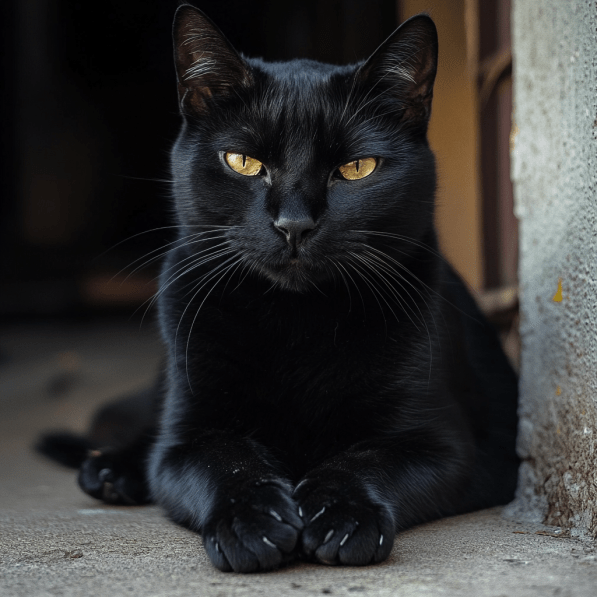
The black cat:
Depending on where you are in this world, black cats can bring either good luck or bad luck. The ancient Egyptians loved black cats and believed they held special powers. They believed black cats held a reference to the goddess, Bastet who was their “protector of homes.” Black cats were protected and it was thought to be a “sin” if a person were to kill or harm a black cat.
During the Middle Ages in Europe, black cats were considered evil and represented witches and sorcerers. They were thought to be supernatural and these witches and sorcerers could turn themselves into black cats to avoid being caught engaging in witchcraft. It is from this era that we get the superstition today that one will encounter some form of misfortune if one were to cross the path of a black cat.
There is even a real-life example of how this superstition has affected black cats since. One such example is referred to as the “Curse of Lincoln’s Cat.” President Lincoln had a black cat named, “Tabby.” Some people claim, that after Lincoln’s assassination, this black cat and any other black cats were bad luck. This fear or perception persists to this day with some animal shelters claiming that black cats are the least likely to be adopted.
Walking Under a Ladder:
Another famous or infamous superstition involves ladders. This superstition goes all the way back to the early Egyptians who believed “triangles” were sacred and a symbol of life. They correctly perceived that a ladder leaning against a wall formed a triangle with the ladder being one side, the wall the second, and the ground the third. They believed that a person would break the sanctity of this shape if they were to walk inside the triangle or under the ladder. They felt this action would bring some form of bad luck.
In Christianity, the ladder symbolizes the Holy Trinity, with the sides of the triangle representing the Father, the Son, and the Holy Spirit. Walking through this sacred shape was thought to bring dishonor, inviting bad fortune to whoever violates this symbol.
And, there is even evidence to help support this superstition. Some years ago, a man named, John Bell was working on a construction site. Mr. Bell had been warned several times by his coworkers not to walk under a ladder. However, he disregarded their warnings and within a few minutes, a heavy piece of equipment fell to the ground, barely missing Mr. Bell. Even though Mr. Bell was not harmed, this example only reiterated the belief that walking under ladders will bring bad luck.
Breaking a Mirror:
One of the most common beliefs is that breaking a mirror will bring “seven years of bad luck.” This belief comes from the Romans who not only believed a mirror reflected a person’s image, but a mirror also allowed the person to peer into their soul. It was thought that breaking a mirror would damage the person’s soul, which would take seven years to repair.
By in the 1500’s mirrors were expensive and very fragile. Breaking a mirror not only was thought to bring bad luck, but it also placed a financial burden on the owner of the mirror.
To highlight this superstition, there is a story of a bride in Scotland who, by accident, broke a mirror while getting ready for her wedding. Sadly for this woman, her family convinced her that breaking the mirror was going to bring her bad luck. To compound this perception, on the day of the wedding, the groom’s carriage broke down, and a series of small accidents occurred throughout the event. The couple was able to marry and to prove this superstition wrong, they stayed married for many years.
Friday the 13th:
We have all heard about Friday the 13th. There has even been a series of scary (or gory) movies made regarding this particular date. Psychologists have even named the fear of Friday the 13th as “Triskaidekaphobia.”
The superstition of Friday the 13th can be traced back to the early Christians and even to Norse mythology. It is believed, there were 13 people at Christ’s Last Supper and Jesus was crucified on a Friday. In Norse mythology, the number 13 represented their god, Loki, who was the god of chaos and trouble.
To help this superstition to grow, the author, Thomas W. Lawson’s very popular book, “Friday the Thirteenth,” which was published in 1907, was about a stockbroker who caused a panic in the stock market.
And, to help further infuse this day into our subculture, on Friday, October 13, 1972, the Uruguayan Air Force Flight 571 crashed high in the Andes Mountains. This event was later highlighted in the book and subsequent movie, “Alive” in which the survivors resorted to desperate measures such as cannibalism to help stay alive.
Opening an Umbrella Indoors:
Another common superstition is that bad luck will soon follow a person who opens an umbrella indoors. This superstition actually began in the 1700’s in England where umbrellas at the time were difficult to manage and often caused minor accidents when opening in small or confined spaces. Usually, this meant a vase or some minor injury to a person, but it was enough to create a long-running superstition that still holds some sway over individuals today.
In fact, in 2014, a woman, without thinking, opened her umbrella inside her office to help it dry from the pouring rain she had just left. Later that day, while at her computer, it “crashed.” This woman’s coworkers were convinced this incident of bad luck was due to her opening the umbrella inside.
A Rabbit’s Foot for Good Luck:
This will be the last example, but there are many, many more superstitions. This one, about carrying a rabbit’s foot is odd, but for those who carry one, they believe it will bring them good luck.
The origins of this superstition date back to African folklore where rabbits were thought to have some sort of mystical power because of their ability to escape their predators. It was thought that having a rabbit’s foot would somehow bring the bearer good luck.
Even today, in the modern world of Las Vegas, there are gamblers to carry a rabbit’s foot as a lucky charm or good luck charm. In one particular incident, a person won a huge pot at one of the many poker tables and referenced his “lucky” rabbit’s foot when asked about his win.
Others:
there are many other superstitions. Some of the more common symbols of both good and bad luck superstitions include horseshoes; tossing salt over your shoulder; and, crossed fingers.
Regardless of whether any of these or any others actually bring good or bad luck, the fact is there are people who believe they will. Sometimes we feel the need for extra protection or maybe a little extra luck in a situation. The psychological effects of having some form of extra protection could not only help bolster a person’s courage, but also improve their decision-making, which in the end, could help them avoid potential harm or misfortune.
 catmando.blog
Leave a comment