
Siamese
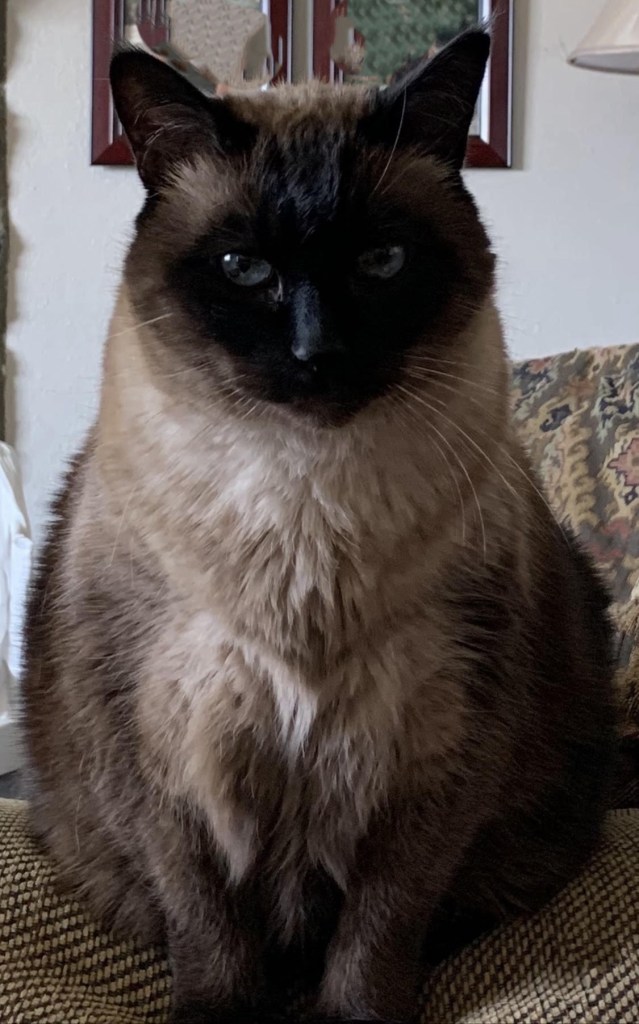
I missed May, and now that it is June, I’ll do two in my attempt to catch up.
The first is the Siamese Cats
These cats have a royal heritage (hence the “Siam” in their name) and are still very popular today.
Siamese cats are among the most recognized and adored cat breeds in the world. With their beautiful blue almond-shaped eyes, short cream-colored coats, and signature color-point patterns, Siamese cats are not only beautiful, but also full of personality. So, where did they come from, and how did they go from sacred temple cats to household companions across the globe?
Let’s take a closer look at the fascinating development, rich history, and modern-day popularity of the Siamese cat.
The origins of the Siamese cat can be traced back hundreds of years to the ancient kingdom of Siam, or what we now know as Thailand. These elegant cats were treasured by royalty and nobles and often lived in temples or palaces. Siamese cats were considered sacred in Thai culture. Some old legends say they were guardians of temples, and when a royal person died, a Siamese cat would receive their soul. The cat was then taken to a temple where monks would care for it for the rest of its life. This belief made Siamese cats not only respected, but also pampered.
The first written descriptions of the breed appear in ancient manuscripts called the “Tamra Maew” or “Cat-Book Poems,” which date back to the 14th century. These poems not only describe the appearance of Siamese cats, but also their behaviors, referring to them as clever, curious, and vocal, just like the Siamese cats we know today.
Siamese cats didn’t make their way to the Western world until the late 19th century. In 1878, one of the first known Siamese cats in America was given to President Rutherford B. Hayes by a U.S. diplomat stationed in Thailand. The cat was named “Siam,” and she became a bit of a celebrity at the White House.
A few years later, Siamese cats were showcased at England’s Crystal Palace Cat Show in 1871. Their unusual looks, with their pale bodies with darker faces, ears, paws, and tails, stood out from the more common fluffy European cats. People were instantly intrigued. These cats had a regal elegance, and their bold blue eyes made them unforgettable.
From there, Siamese cats began to grow in popularity across Europe and North America. Breeders worked to develop the unique color-point pattern and the sleek body type we see in show-quality Siamese cats today.
The early Siamese cats that came from Thailand had a more rounded face, muscular build, and a shorter, thicker tail. As breeders in the West began to refine the breed, they bred for more extreme features: a longer, more slender body, a wedge-shaped head, and larger ears.
Today, there are generally two types of Siamese cats; traditional Siamese (also known as “Applehead”), which closely resemble the original Siamese from Thailand, with rounder heads and fuller bodies. They are considered more robust and are often preferred by those who want a “classic” look. The second type is known as the modern Siamese. These are the ones typically seen in cat shows, with a very sleek and elongated look, large ears, and a more angular face.
Both types share the Siamese’s key personality traits and striking color points, but their appearance is noticeably different.
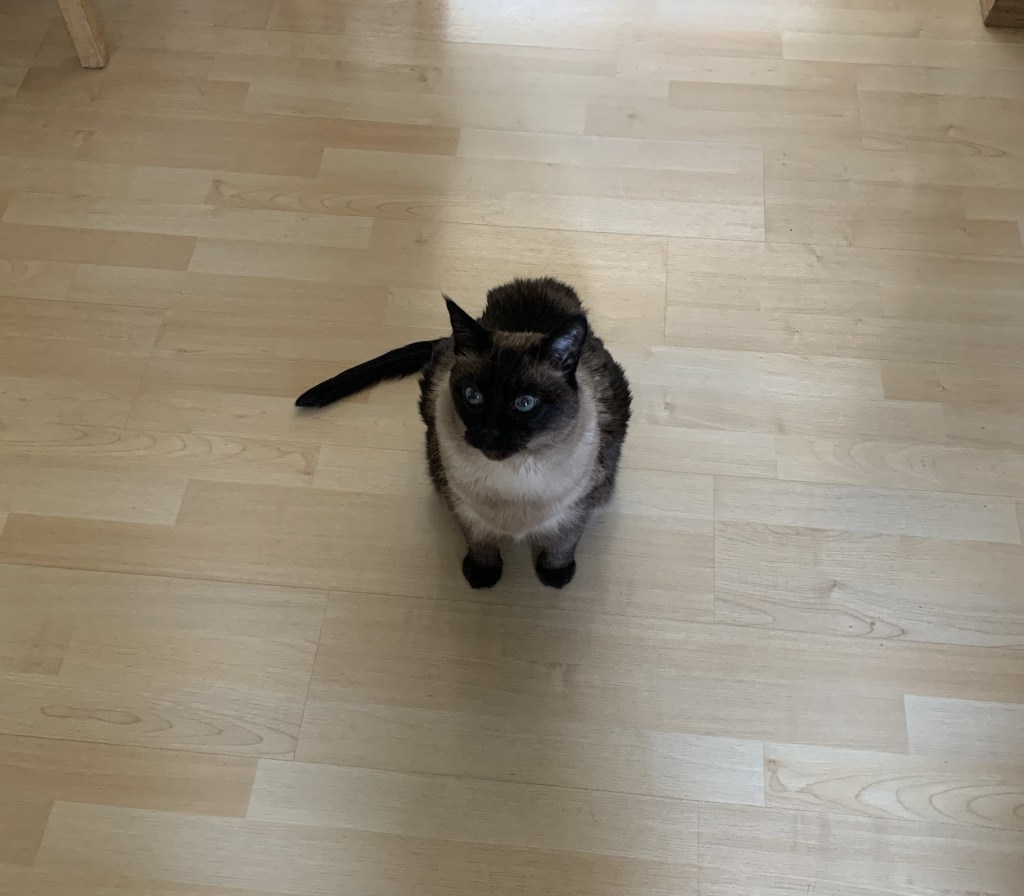
One thing that truly sets Siamese cats apart is their personality. They are known for being extremely vocal. Some would say they “talk” to their owners with a distinctive, loud meow. It’s not uncommon for a Siamese to follow their human from room to room, expressing their point of view the entire way.
Siamese cats form strong bonds with their owners. They are loyal, loving, and have even been described as “dog-like” in their behavior. They enjoy being involved in whatever their humans are doing, whether that’s folding laundry, watching TV, or typing at a computer. Many owners find their Siamese cat perched on their shoulder or lap throughout the day.
These cats are also very intelligent and curious, which means they need mental stimulation. Toys, puzzles, climbing trees, and playtime are essential to keep a Siamese happy. Without enough interaction, they can become bored, and a bored Siamese can be mischievous.
Today, Siamese cats continue to be one of the most popular and beloved cat breeds in the world. They consistently rank high in lists of favorite cat breeds across the United States, Canada, and Europe. Their striking looks and interactive personalities make them a favorite among families, single pet owners, and seniors alike.
Siamese cats have also made their mark in pop culture. Perhaps the most famous example is Disney’s Lady and the Tramp, where the sneaky Siamese duo, Si and Am, sang the unforgettable “We Are Siamese” song. While the portrayal was exaggerated, it introduced Siamese cats to a wider audience and solidified their image in American homes.
You’ll also see Siamese cats in movies, TV shows, and even viral videos on social media. Their curiosity, expressiveness, and attachment to their humans also make them entertaining stars online.
Siamese cats are generally healthy and have a long lifespan, often living 15 to 20 years with proper care. However, like many purebred animals, they can be prone to certain health conditions, such as respiratory issues, dental disease, or eye problems like crossed eyes or progressive retinal atrophy (PRA). Regular vet visits, a balanced diet, and keeping them indoors can help your Siamese live a long, happy life.
 catmando.blog
Leave a comment