
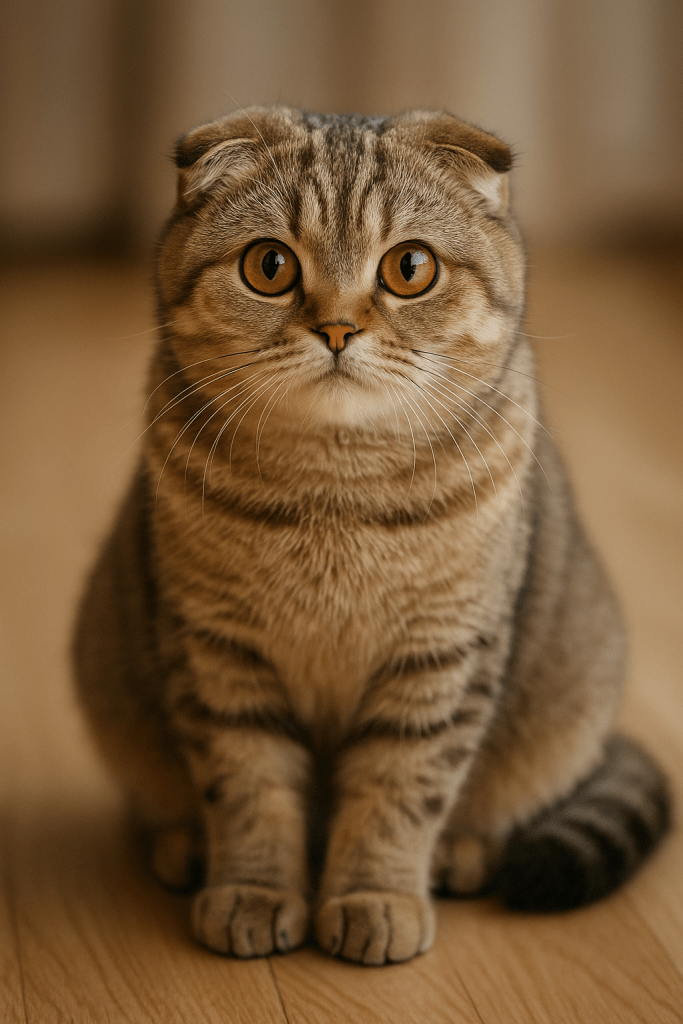
I was at the dentist office yesterday and a long-time friend told me about finding Scottish Fold kittens for sale on the internet for $800 a piece. Both of us thought that kind of price was ridiculous until I did a little research. It seems the Scottish Fold and its long-haired cousin the Highland Fold are one of the most recognizable cat breeds in the world, known for their distinctive ears that fold forward and downward, giving the cat a round, owl-like appearance. This unique feature, combined with their gentle temperament, has made the Scottish Fold a beloved companion for many cat enthusiasts. Yet behind their adorable look lies a breed that requires thoughtful care and an awareness of certain health concerns.
The Scottish Fold originated in Scotland in the 1960s, when a shepherd noticed a barn cat with unusual, folded ears. Through selective breeding, this physical trait became a defining feature of the breed. The fold in the ears is caused by a genetic mutation that affects the cartilage throughout the body, not just in the ears. This mutation gives Scottish Folds their unique appearance, but it is also linked to potential joint issues.
In terms of temperament, Scottish Folds are affectionate, calm, and definitely people oriented. They bond closely with their families and enjoy being included in daily activities. Many owners describe them as moderately active cats who prefer gentle play and plenty of lap time. They tend to adapt well to different living environments, making them suitable for apartments, houses, and families of any size. Their soft, sweet expressions and relaxed nature make them especially attractive companions for those who want a gentle, quiet pet.
Caring for a Scottish Fold is similar to caring for most cats, but with a few added considerations. As mentioned their coats come in both short and long-haired varieties. The short-haired Scottish Fold requires weekly brushing to remove loose fur, while the long-haired Highland Fold benefits from brushing several times per week to prevent matting. Their folded ears can trap moisture and debris, so regular ear checks and gentle cleaning are essential to prevent infections. Like all cats, they need high-quality food, fresh water, dental care, and routine veterinary checkups.
One of the most important aspects of caring for a Scottish Fold is monitoring for joint and mobility problems. The same gene that causes the folded ears can also weaken the cartilage in the legs, tail, and spine. This condition, which is known as osteochondrodysplasia (pronounced: os-tee-oh-kon-dro-dis-PLAY-zhuh), can cause stiffness, pain, or difficulty jumping. Because the mutation is present in every Scottish Fold, the risk is significant. Responsible breeders are now breeding a Scottish or Highland Fold with a straight-eared cat to help reduce the chances of severe issues, but even carefully bred cats may still develop problems later in life.
Potential owners should watch for signs such as reluctance to play, sensitivity when being touched, or unusual positioning of the limbs or tail. Regular veterinary care, weight management, and joint-support supplements can also help maintain comfort and mobility. Gentle handling and avoiding high jumping surfaces also benefit their long-term health.
The Scottish Fold is an undeniably charming breed with a loving personality and distinctive look. With proper care, attention, and understanding of their potential health needs, they can make devoted companions. However, their genetic risks mean they are best suited for owners committed to ongoing health monitoring and providing a supportive, comfortable home.
 catmando.blog
Leave a comment