
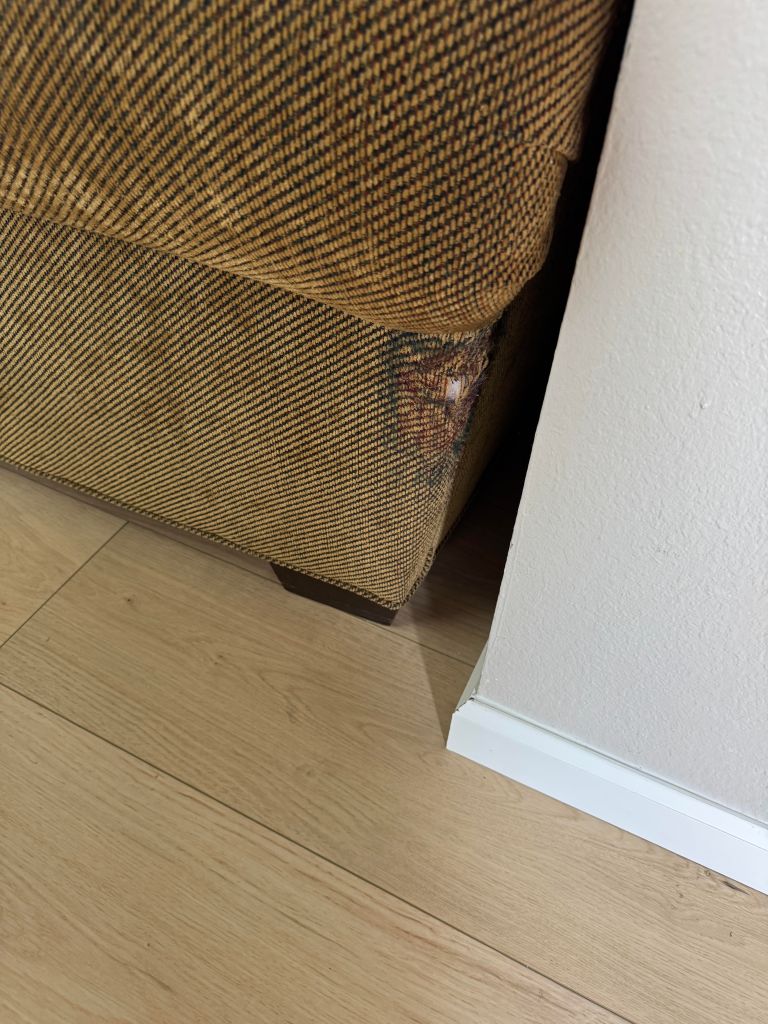
These two questions come up a lot. When I was in high school, I worked for a veterinarian and one of my duties was declawing cats. It is one of the most miserable and heart-wrenching things a person can do. I personally feel it is cruel.
If your cat is scratching the furniture, you are not alone. Many cat owners deal with torn couch arms, claw marks on chairs, and shredded carpet corners. While it can be frustrating, scratching is a normal and healthy cat behavior. The goal is not to stop your cat from scratching completely. The goal is to teach your cat where to scratch.
My wife and I just bought a new set of couches because our previous cat loved to sink her claws into the old set.
So Why Do Cats Scratch Furniture?
Cats scratch for several natural reasons. They scratch to stretch their bodies, exercise their paws, remove old claw layers, mark their territory, and release energy. Scratching also leaves both a visual mark and a scent from glands in their paws.
So when your cat scratches the couch, your cat is not trying to be bad. Your cat is doing something that feels natural. The problem is simply the location.
Do Not Declaw Your Cat!
Declawing may sound like an easy fix, but it is not the same as trimming nails. Declawing removes part of the cat’s toes and can lead to pain, stress, behavior problems, and difficulty walking or jumping. Instead of declawing, use safer and kinder ways to protect your furniture and redirect your cat’s scratching. My middle daughter has little claw covers she meticulously puts on each claw. The cat still “pretends” to scratch the couch, but no longer does any damage.
The best way to stop a cat from scratching furniture is to give your cat something better to scratch. Try a sturdy cat scratching post, cardboard scratcher, scratching pad, cat tree, or sisal rope post.
Place the scratcher close to the furniture your cat already likes to scratch. If your cat scratches the couch, put the scratching post beside the couch. Once your cat starts using it, you can slowly move it to a more preferred location.
Some cats love cardboard. Others prefer carpet, rope, wood, or fabric. If your cat ignores one scratching post, try another style. A good cat scratching post should be tall enough for your cat to stretch fully and strong enough that it will not tip over.
Like with all of us, your cat may also respond to a reward. You might try encouraging your cat to use the scratching post by sprinkling catnip on it or place treats nearby. You can also gently play with your cat around the post using a feather wand or toy. When your cat scratches the post, praise your cat right away.
You can protect your furniture while your cat learns. Try using double-sided tape, furniture covers, or plastic guards on the areas your cat scratches. Cats usually dislike sticky surfaces, so this can help discourage scratching.
Another way to help reduce damage is to keep your cat’s claws trimmed. Use cat nail clippers and only trim the sharp tips. If you are unsure how to do this safely, ask your veterinarian or groomer to show you. It is really easy to injure your cat, so extra caution is highly recommended.
Lastly, Be Patient and Consistent
Learning takes time. Do not yell, hit, or scare your cat. Punishment can make cats nervous and may make behavior worse. Instead, redirect your cat to the scratching post every time.
Furniture scratching can be managed without declawing. With the right scratching post, patience, nail care, and a little training, your cat can stay happy, healthy, and out of trouble.
 catmando.blog
Leave a comment